

U.S. Retail Sales Drop 0.6%: How Your Business Should Adapt

U.S. Retail Sales Drop 0.6%: How Your Business Should Adapt Understanding the Decline in US Retail Sales In an unexpected twist, US retail sales experienced a n…
U.S. Retail Sales Drop 0.6%: How Your Business Should Adapt
Understanding the Decline in US Retail Sales
In an unexpected twist, US retail sales experienced a notable downturn, declining by 0.6% in July. This drop has raised eyebrows among economists and market analysts who are striving to understand its implications on the broader economic landscape. The retail sector, a crucial barometer of consumer spending and confidence, represents a significant portion of economic activity. With such a decline, questions arise about what this means for future economic trends and consumer behavior.
The Impact on Retailers and Consumers
For retailers, a dip in monthly sales can spell difficult times. Companies may face increased pressure to offer discounts or promotions to stimulate consumer interest. This reduction in sales suggests that consumer confidence might be waning, potentially due to increased financial pressures or economic uncertainties. With economic indicators like these, businesses must adapt their strategies to weather these shifts. Retailers might consider enhancing their online presence or exploring new market segments to counterbalance physical store challenges.
Factors Contributing to the Decline
Several factors can contribute to such a decline in retail sales. Inflationary pressures play a significant role, as rising prices can deter consumers from spending freely. Additionally, supply chain disruptions, which have been a persistent issue since the onset of the pandemic, may exacerbate inventory challenges, limiting product availability on shelves. According to Reuters, rapid inflation continues to impact purchasing power, signaling tighter belts for many consumers.
Exploring Long-term Implications
The decline in retail sales does not just affect vendors and customers in the immediate term; it also projects potential long-term economic impacts. As consumer spending softens, it may lead companies to reevaluate their workforce needs, potentially causing shifts in employment levels. Investor confidence could also be affected as stakeholders consider the stability of investing in traditional retail. For a deeper understanding of how this relates to investment strategies, consider exploring why digital gold is becoming a fascinating alternative.
In conclusion, the downturn in retail sales performs as a crucial indicator, signaling possible economic volatility. It beckons businesses and consumers alike to adopt adaptable strategies. As experts delve deeper into the causes and consequences, staying informed will be essential for navigating this evolving economic terrain.
Analyzing the Retail Decline
The recent dip in US retail sales by 0.6% in July marks a significant moment for both businesses and consumers. This downturn reflects broader economic pressures including inflation, supply chain disruptions, and shifting consumer behavior. For businesses, understanding these dynamics can influence strategic decisions aimed at mitigating potential losses. To offer an insightful perspective, we’ll explore the causes, implications, and possible actions businesses can take in response to this trend.
Contributing Factors
Several factors have played a role in the retail sales decline. One major contributor is inflation, which has significantly impacted consumer purchasing power. Rising costs in essentials such as food, utilities, and housing have forced consumers to tighten their discretionary spending. Additionally, the lingering effects of supply chain challenges have led retailers to deal with inventory shortages, affecting availability and pricing. According to Statista, the inflation rate hit 5.4% in July, which resonates with the constriction in consumer spending habits.
Implications for Retailers
Retailers must navigate these economic headwinds by adopting strategies that can buffer against sales declines. For instance, focusing on enhancing customer experience through personalized services or loyalty programs could drive repeat business. Moreover, optimizing supply chain operations to ensure product availability becomes imperative amidst logistics challenges. Companies may also consider digital transformation as a solution, enabling seamless online shopping experiences to adapt to the evolving consumer preference toward e-commerce.
Strategic Adaptations
Embrace E-commerce: Retailers can expand their online presence to capture a wider audience. Integrating advanced analytics can help in understanding consumer behavior and tailoring offerings accordingly.
Focus on Essentials: Adjusting inventory to favor essential goods can align with current consumer demands and maintain revenue stability.
Partnerships: Forming strategic alliances can enhance supply chain effectiveness. Consider joining forces with logistics companies or suppliers for steady inventory flow.
For a broader insight into investment alternatives during uncertain times, exploring opportunities in digital products can be beneficial. Consider reading Why Investors Are Moving To Digital Gold GCC for a deep dive into innovative investment avenues.
As retailers and consumers deal with these challenges, the key lies in proactive and adaptive measures. Staying informed and agile will be crucial in overcoming the hurdles posed by the recent downturn in the retail sector as outlined in https://breakingthenews.net/Article/US-retail-sales-down-by-0.6-in-July/66923843.

A bustling outdoor market scene with various storefronts visibly closed, showcasing "Sale" signs in the windows; nearby, a street vendor offers discounted goods, symbolizing the retail downturn.
Understanding the Factors Behind the Sales Decline
In July, the US retail sector experienced a downturn with sales dropping by 0.6%. This decline, highlighted in the report, can be attributed to several interlinked factors. Consumer behavior changes, economic pressures, and supply chain challenges all play significant roles in shaping this trend.
Consumer Behavior Shifts
One pivotal factor affecting retail sales is the shift in consumer behavior. Amid concerns about inflation and economic stability, consumers are prioritizing essentials over discretionary purchases. According to recent industry data, major retailers like Walmart and Target reported increased sales of groceries but saw a dip in non-essential items such as electronics and home goods. This pattern suggests a growing preference for saving rather than spending on luxury goods, impacting overall retail performance.
Economic Pressures and Inflation
The broader economic landscape also influences retail dynamics. Many Americans face heightened financial stress due to rising living costs, prompting them to reduce spending. The Federal Reserve's interest rate hikes have added to the borrowing costs, affecting consumer debts and disposable incomes. Industry experts suggest that these economic pressures are likely to persist, further depressing consumer spending in the near term.
Supply Chain Challenges
Supply chain disruptions remain another critical factor. Although there's been some recovery, certain sectors still face inventory issues. Items like electronics and automotive products are often slower to restock, leading to reduced sales due to lack of availability. Companies are employing strategies such as enhancing their logistics networks and exploring alternative suppliers to mitigate these challenges.
These issues underscore the importance of agile business strategies. Companies are increasingly turning to digital solutions, such as those provided by Just Gold, to streamline operations and adapt to these evolving market conditions. Moreover, businesses are encouraged to foster partnerships and improve customer engagement to enhance brand loyalty during these uncertain times. For businesses seeking collaborative opportunities, exploring the option to Partner With Us could be highly beneficial.
Deeper Insights and Strategic Implications
Beyond the headline drop in retail activity, the 0.6% decrease in July signals more nuanced shifts in consumer behavior and broader economic dynamics. Analysts suggest that the decline reflects the fading impact of earlier government stimulus like tax refunds, prompting a return to more cautious spending patterns. This points to a potential reallocation of budgets toward essential goods and services rather than discretionary purchases. Such behavioral shifts may serve as early indicators for businesses to reassess their inventory strategies and focus promotional efforts on value-driven offerings. According to reports, the pullback in spending came as the “summer tax‑refund boost fades” — a trend that may continue into the third quarter unless bolstered by renewed incentives or stronger wage growth AP News.
Importantly, the July slide was the most pronounced monthly decline in over a year, unsettling prior expectations from economists, who had anticipated a modest 0.1% gain. Despite these surprises, the prevailing view remains that the consumer sector might still support moderate economic expansion into the July–September period — though growth forecasts are being revised downward in light of this setback Axios.
For businesses and marketers, these trends underscore the importance of adaptive tactics. Retailers could benefit from refining their product mix—emphasizing everyday value and essentials—and leveraging targeted marketing campaigns during periods of uncertainty. A practical example would be grocery and household item suppliers offering bundled promotions or loyalty rewards to maintain foot traffic and steady revenue flows.
Moreover, as consumers potentially shift more spending toward services, businesses in hospitality, dining, and travel may need to deploy proactive strategies such as limited-time discounts, loyalty incentives, or partnerships with ecommerce platforms to capture those reallocated dollars. Tracking these evolving preferences via consumer surveys or real‑time spend analytics could offer a timely advantage.
In context of the article on https://breakingthenews.net/Article/US-retail-sales-down-by-0.6-in-July/66923843, these insights reinforce the message that businesses must stay agile. Encouraging partnerships—like “Partner With Us”—can help companies to pool resources, share insights, and build resilience amid volatile consumer demand.
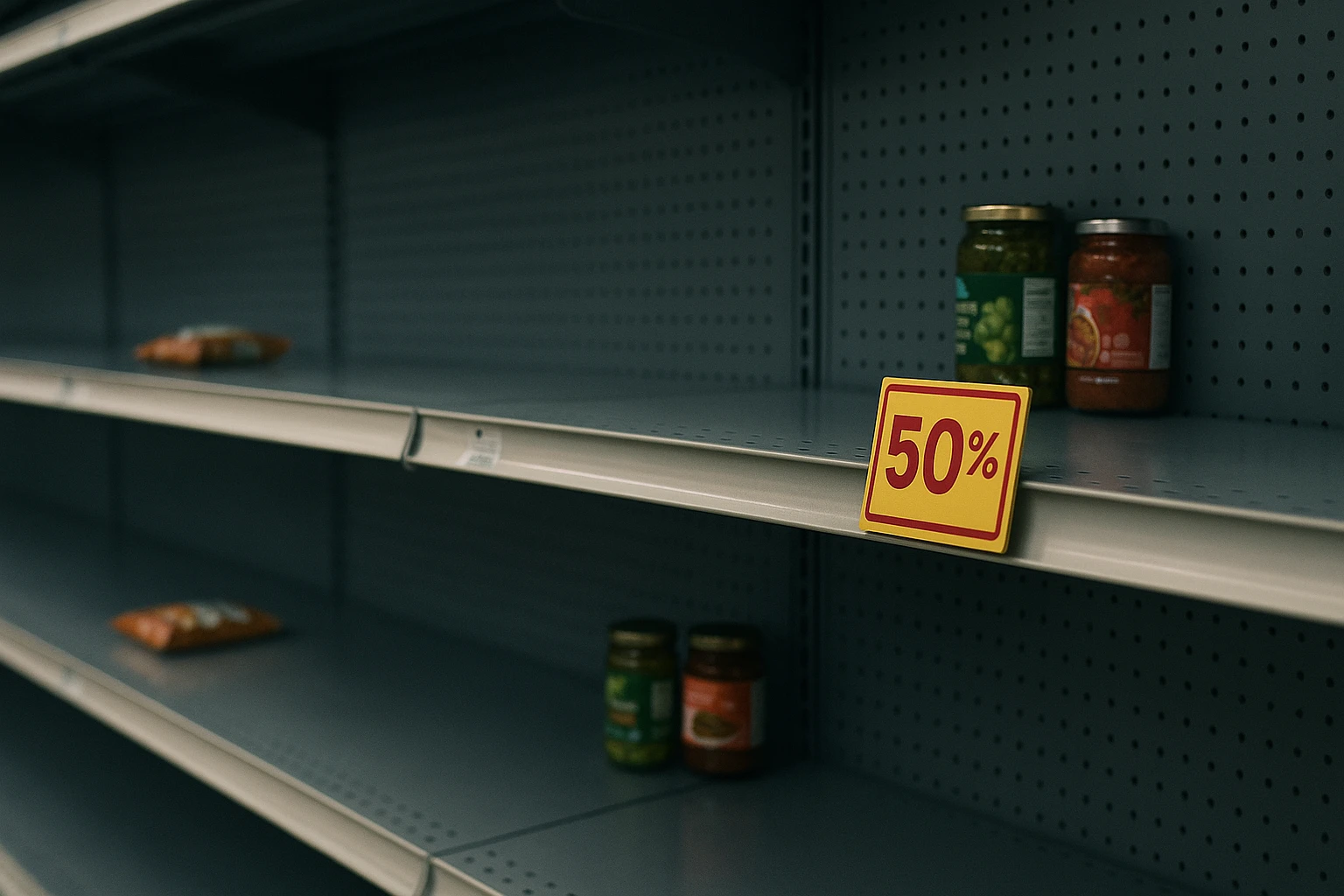
A close-up of a nearly empty grocery store shelf with a few remaining items, accompanied by a small "50% Off" clearance sign, illustrating the impact of the retail sales decline.
Conclusion: Strategies for Navigating Retail Downturns
The recent decline in retail sales, as reported by Breaking the News, underscores the need for businesses to adapt proactively to changing economic conditions. As retailers face these challenges, it's crucial to employ strategies that mitigate risks and harness new opportunities.
Key Takeaways and Actionable Insights
Retailers should focus on expanding their customer engagement strategies. This involves leveraging digital platforms to reach broader audiences while enhancing personalized shopping experiences. By utilizing advanced analytics, businesses can better understand consumer behaviors and tailor their offerings to meet specific demands. For example, implementing targeted marketing campaigns based on customer preferences can increase conversion rates and foster brand loyalty.
Additionally, managing inventory effectively is paramount. Companies can minimize losses and optimize stock levels by employing real-time data tracking and predictive analytics. These technologies allow for accurate forecasting of consumer demand, reducing the risk of overstocking or stockouts. According to a study by McKinsey, retailers who adopt these data-driven approaches are more resilient in times of economic volatility.
Embracing Innovation and Technology
Investing in technology is essential for staying competitive. Retailers should consider incorporating artificial intelligence and machine learning to streamline operations and enhance customer service. Innovations such as chatbots and virtual assistants can provide round-the-clock customer support, improving the overall shopping experience.
Moreover, the adoption of sustainable practices can not only reduce costs but also attract environmentally-conscious consumers. By focusing on sustainability, retailers can differentiate themselves in a crowded marketplace and build a loyal customer base.
Next Steps with Just Gold
As businesses seek to implement these strategies, resources like Just Gold provide invaluable support. With tools designed to enhance digital presence and optimize operational efficiency, Just Gold helps retailers navigate complex market conditions and achieve sustained growth. By leveraging such platforms, companies can effectively transform challenges into opportunities, ensuring a prosperous future.
In conclusion, while the 0.6% dip in retail sales presents challenges, it also offers a unique opportunity for businesses to reassess and innovate. By adopting a proactive approach and utilizing advanced tools and resources, retailers can thrive despite economic uncertainties.