
US Retail Sales Unexpectedly Fall and What That Means for Economy

US Retail Sales Unexpectedly Fall and What That Means for Economy Introduction A sudden dip in consumer spending can spell trouble for the U.S. economy—and that…
US Retail Sales Unexpectedly Fall and What That Means for Economy
Introduction
A sudden dip in consumer spending can spell trouble for the U.S. economy—and that’s exactly what happened in July. According to the Commerce Department, U.S. retail sales unexpectedly fell 0.6% last month, marking the sharpest decline since May 2025 apnews.com. This abrupt shift surprised economists, who had anticipated modest growth instead, and raised significant questions about the trajectory of consumer confidence heading into the third quarter.
Several factors contributed to the July slump. Notably, Amazon’s Prime Day was moved to June this year, triggering a 2.2% plunge in online sales. That shift, combined with a nearly 0.9% drop at gas stations due to lower fuel purchases, exerted downward pressure on overall numbers apnews.com. Though these disruptions appear temporary, they underscore how timing shifts in major retail events and volatile energy costs can mask deeper trends in spending behavior.
Still, consumer resilience isn't entirely absent. Despite the downturn, sales at clothing and accessories retailers, furniture and home furnishings stores, and garden supply outlets posted gains, and restaurant spending even rose by 0.5%—providing pockets of strength amid broader softness apnews.com. Economists caution that while one weak month doesn't define a trend, the report, paired with tepid jobs data, suggests caution is warranted as consumer momentum shows signs of fatigue apnews.com.
Amid this backdrop, businesses and investors alike should consider how agile strategies—such as adjusting promotional timing, diversifying revenue channels, or targeting value-conscious shoppers—can help weather these abrupt spending pauses. For more insight into building trust and flexibility amid changing consumer behavior, explore our deep dive on Trust In Gold The Foundation Of Every Strong Portfolio.
Factors Behind the Decline in Retail Sales
Understanding why retail sales underwent an unexpected drop in July requires an examination of various contributing factors. According to Reuters, rising inflation has significantly impacted consumer purchasing power. The increased costs of essential goods have led consumers to rethink discretionary spending, which is reflected in the decreased sales figures. This trend is not isolated, as many retailers have reported similar patterns, indicating a broader shift in consumer priorities.
Moreover, the transition back to pre-pandemic behaviors has altered spending habits. Consumers have shifted focus towards experiences such as travel and dining, resulting in less emphasis on goods such as apparel and home electronics. Consequently, sectors that thrived during the pandemic are seeing reduced demand, amplifying the effects of the retail sales dip. These consumer preference shifts underscore the critical need for businesses to be agile and attentive to market trends to maintain competitiveness.
To illustrate the impact, a case study can be drawn from a major apparel retailer that, until recently, was experiencing robust sales. However, recent financial results showed a decline attributed to reduced foot traffic and an oversupply of inventory, leading to heavy discounting. This scenario is emblematic of the challenges businesses face in adapting to sudden market changes, emphasizing the importance of strategic inventory management.
Implications for Retail Strategy
Retailers are being pushed to innovate and adapt in this evolving economic landscape. Utilizing data analytics to better predict consumer demand can be a game-changer. Retailers who leverage such insights are better positioned to optimize their inventory levels, reducing the risk of overstocking or stockouts. For more insights on how technology can empower strategic decision-making, consider exploring From Tradition To Innovation Why Digital Gold Is The Next Big Investment Trend.
Additionally, diversifying the product mix to include essentials or trending items can help stabilize sales. Retailers might also consider bolstering their e-commerce capabilities to capture online shoppers who continue to prefer digital channels for convenience. As the retail industry recalibrates in response to these dynamics, staying informed on consumer trends will be crucial for sustained growth.

A bustling supermarket aisle with half-empty shelves, displaying various brands of cereal, pasta, and canned goods, while a discount sign hangs above indicating a mid-month sale.
Factors Contributing to the Decline in Retail Sales
The unexpected dip in US retail sales during July, as highlighted in this report, can be attributed to several key factors impacting consumer behavior. One prominent element is the lingering effects of inflation, particularly in essential commodities. Consumers have been tightening their belts as prices rise, leading to a decrease in discretionary spending. According to the Bureau of Labor Statistics, inflation rates in recent months have raised concerns about purchasing power and overall economic stability.
Another significant contributor is the shift in consumer priorities. The pandemic has altered shopping habits, with preferences moving towards essential goods and services. As a result, sectors like entertainment and dining have seen reduced consumer interest. This shift is evident in the retail landscape where businesses now face the challenge of adapting to new demands. Retailers targeting discretionary goods must innovate to recapture consumer attention by offering unique experiences or personalized services.
Even the role of technology and e-commerce cannot be underestimated. Online shopping has surged, but as restrictions ease, competition is fierce with physical stores reopening. Retailers that diversified and enhanced their online presence have maintained growth, emphasizing the importance for others to follow suit. In this regard, partnering with platforms like Just Gold can offer retailers a unique edge by streamlining investment strategies and adapting to market changes swiftly.
Additionally, global supply chain disruptions continue to pose challenges. Delays and shortages have affected product availability, leading to frustration and decreased purchasing among consumers. Retailers are encouraged to explore alternative strategies to mitigate these issues, such as holding larger inventories or fostering stronger relationships with suppliers.
Given these factors, the decline in retail sales is not just a short-term anomaly, but a call to action for businesses to rethink strategies and improve resilience. Providing value-driven, innovative solutions will be crucial for surviving and thriving in this dynamic environment. For those interested in understanding how these dynamics impact investment opportunities, exploring how digital gold facilitates constant investing offers insightful perspectives.
Navigating the Retail Landscape Amid Unpredictable Sales Trends
The unexpected decline in U.S. retail sales in July, as highlighted in this report, signifies a critical juncture for businesses across industries. Analysts were surprised by this downturn, given prior expectations for steady or slightly increasing sales. This dip emphasizes the volatile nature of consumer behavior, especially as economic uncertainties prevail. Such fluctuations demand robust strategies from retailers aiming to maintain their market foothold.
Adapting to Shifting Consumer Preferences
Retail businesses must develop agility in their operational strategies to accommodate changes in consumer preferences. This might include diversifying product ranges or investing in data analytics to better predict demand shifts. For instance, during uncertain economic periods, consumers often reallocate spending from luxury items to essential goods. Retailers positioning themselves with a strong inventory of everyday necessities may find resilience against sales volatility, thereby preserving their revenue streams.
Implementing Technological Advances
Integrating advanced technology into retail operations can significantly mitigate the impact of unexpected market changes. Using artificial intelligence and machine learning, retailers can gain insights into purchasing patterns and consumer sentiment. A case study from Forbes illustrates how AI-driven personalization tools have bolstered customer engagement and increased sales by tailoring products to individual preferences. This data-centric approach empowers retailers to preemptively adjust their strategies in response to market signals.
Fostering Consumer Engagement
Another essential strategy in navigating unpredictable sales trends involves building stronger relationships with customers. Businesses can achieve this through enhanced loyalty programs and personalized marketing campaigns. By leveraging customer data, retailers can craft targeted promotions that resonate with specific demographics, driving renewed interest and boosting sales during slower periods. Additionally, engaging customers through interactive platforms, such as social media and mobile apps, can deepen brand loyalty and expand reach.
In summary, with the U.S. retail sales decline underscoring the need for adaptive strategies, companies must commit to understanding their consumers while embracing technological advancements. By doing so, they not only navigate challenges but also unlock opportunities for growth and sustained success in today’s fast-evolving retail landscape.
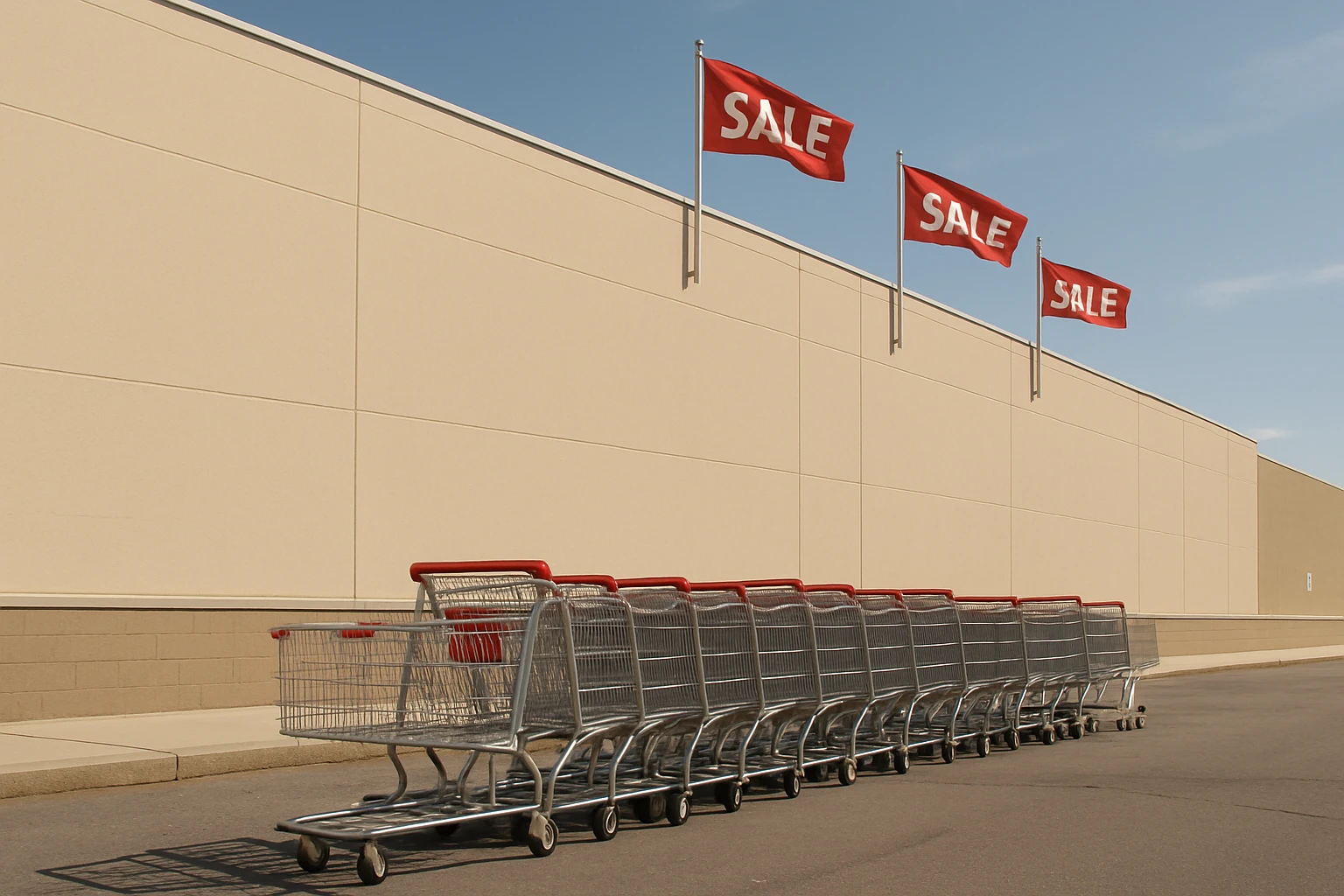
A line of shopping carts abandoned outside a large retail store, with a clear sky above and sale banners flapping gently in the breeze, signaling a slowdown in customer activity.
Conclusion and Key Takeaways
The unexpected decline in US retail sales in July, as reported by MSN, highlights significant shifts in consumer behavior. It underscores the necessity for retailers to adapt by enhancing their digital presence and responding to consumer trends. Recognizing these changes can help businesses strategically realign their operations and sustain growth even in uncertain economic times.
Actionable Insights for Retailers
Retailers should consider harnessing data analytics to better understand consumer preferences and product demands. By doing so, companies can tailor their offerings more effectively, addressing specific needs and desires of their target markets. Additionally, integrating personalized marketing strategies can foster customer loyalty and drive sales.
Investing in technology and digital platforms is crucial. Adopting e-commerce solutions and optimizing online sales channels will allow businesses to reach a broader audience. Enhancing the online shopping experience with user-friendly interfaces, reliable customer service, and easy navigation is essential to staying competitive.
Financial Resilience and Strategic Planning
Building financial resilience through effective cash flow management can safeguard businesses against economic volatility. Establishing strategic partnerships and exploring diversification of products or services are potential avenues for retailers to explore. These strategies can offer additional revenue streams and reduce reliance on a single market segment.
Moreover, keeping abreast of market trends and consumer sentiment through reliable sources is imperative for informed decision-making. Engaging with platforms like Just Gold can provide businesses with valuable insights and resources for financial planning and market analysis.
Call to Action
As the retail landscape continues to evolve, businesses must remain vigilant and proactive in their approaches. Utilizing resources like Just Gold can be a pivotal step in developing a robust strategy that aligns with current market demands. By leveraging these insights, retailers can confidently navigate the challenges ahead and foster sustainable growth.