
Trust in Gold: The Foundation of Every Strong Portfolio

In gold we trust, says Just Gold. Markets rise and fall. Currencies weaken and strengthen. But trust — the invisible thread that ties wealth together — endures.…
In gold we trust, says Just Gold.
Markets rise and fall. Currencies weaken and strengthen. But trust — the invisible thread that ties wealth together — endures. And few assets embody that trust like gold.
The Oldest Promise in Finance
Before there were banks, there was gold. Before there were markets, there was belief. Long before anyone spoke of yield curves or portfolio diversification, people buried gold in the ground, carried it across deserts, and passed it from one generation to the next.
Why? Because gold didn’t just hold value — it held faith. Faith that it would still be there when everything else wasn’t. That ancient instinct hasn’t changed; only the form has. Today, gold still sits quietly at the heart of every stable portfolio, whether it’s in bars, coins, ETFs, or digital form on a screen.
Why Every Portfolio Needs an Anchor
The modern investor is spoiled for choice: stocks, bonds, real estate, crypto, venture capital. Each promises growth, but each carries risk. Gold doesn’t promise growth. It promises balance.
When markets rally, gold may lag. But when fear takes over, gold becomes the ballast — steady, calm, unyielding. It’s the asset you don’t buy to get rich; you buy it so that you stay rich.
That’s why even the most sophisticated investors, from sovereign wealth funds to family offices, keep a portion of their holdings in gold. It’s the insurance policy against uncertainty — the one that pays not in cash, but in confidence.
The Mathematics of Stability
Across decades, data tells a simple story: portfolios that include gold tend to perform better during times of volatility. A 10–15% allocation has historically lowered overall risk without dragging long-term returns.
Why? Because gold’s price often moves inversely to equities and currencies. When inflation rises, when debt grows, when confidence dips — gold tends to hold steady or climb. It’s not magic. It’s math meeting psychology.
In the GCC, Trust Is Tangible
In the Gulf, the relationship with gold runs deeper than diversification. It’s cultural. It’s emotional. Gold is not just a hedge — it’s heritage. It’s given at weddings, held in family safes, and viewed as the ultimate expression of prudence.
That cultural instinct now meets modern investing. GCC investors are blending the tangible and the digital, using online gold platforms to manage what was once locked away. It’s still the same trust — just expressed through code instead of keys.
From Physical to Digital: The Continuum of Trust
Skeptics often ask: can digital gold really carry the same trust as the physical kind? The answer lies in transparency.
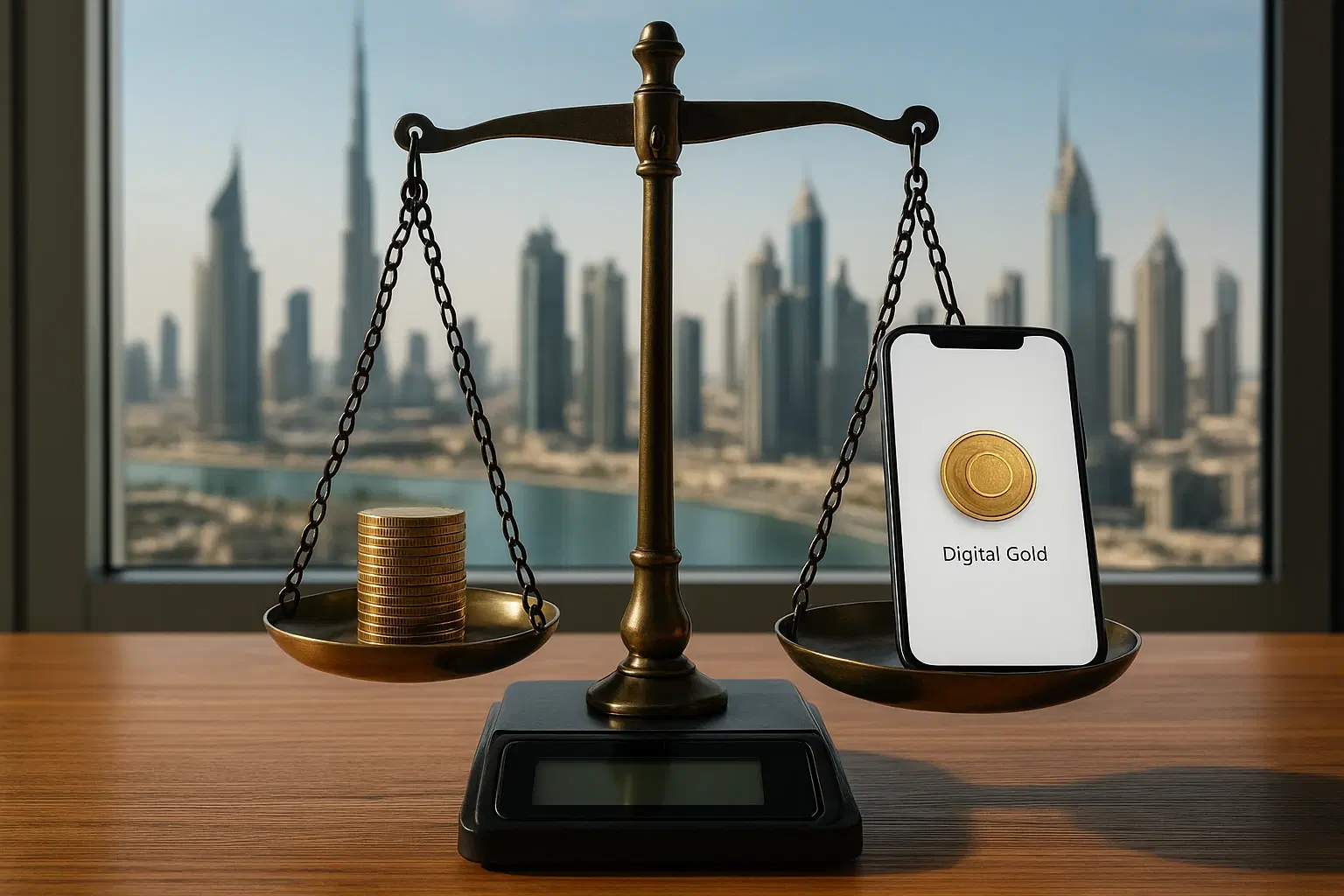
Digital gold that’s fully backed by audited, insured metal stored in recognised vaults is not a derivative — it’s a new form of custody. Platforms like those regulated by the DMCC in Dubai or approved by central authorities in Singapore and London are building this bridge: the tangible bar linked to a digital claim. The old promise — that your gold is real, safe, and redeemable — remains intact. Only the way you access it has evolved.
Gold as the Language of Confidence
Every crisis in modern history — from oil shocks to recessions, wars to pandemics — has had one universal refuge: gold. When trust in systems wavers, gold becomes the system.
It’s the only asset with no counterparty risk, no central issuer, no dependency on a signature. Its value doesn’t come from someone’s promise to pay. It is the promise. That’s why, even as investors explore digital currencies and new financial frontiers, gold remains the quiet constant — the baseline of belief in a world built on speculation.
Lessons from 2025’s Markets
This year has reminded investors once again that volatility never sleeps. Inflation has cooled but not vanished. Global growth has wavered, interest rates are pivoting, and geopolitical risk remains a stubborn shadow.
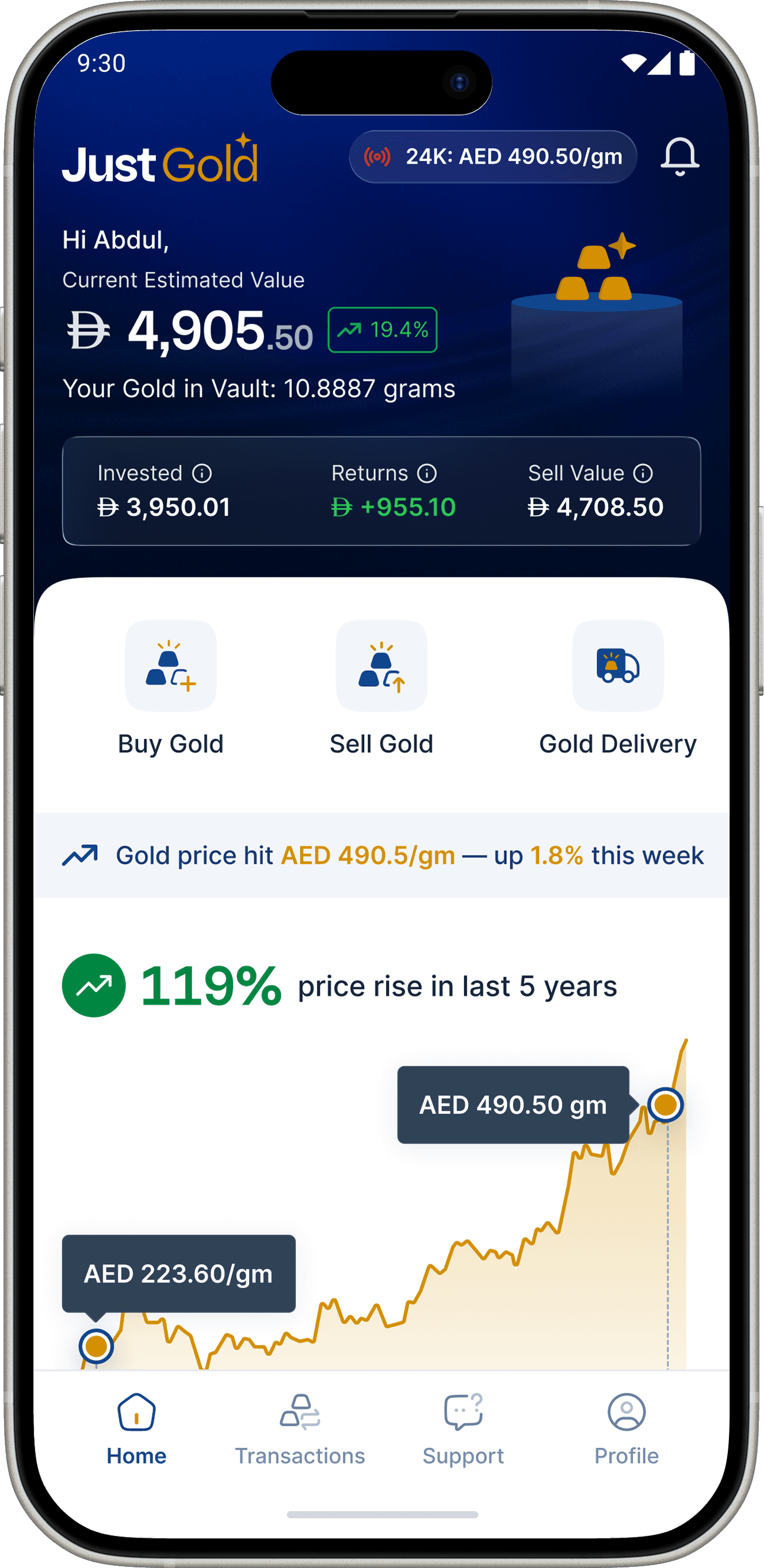
In this environment, gold has done what gold always does — stayed relevant. Prices have held near record highs, buoyed by central bank buying and investor caution. In the GCC, demand for digital gold platforms has surged, reflecting a shift in how people seek safety: instant, mobile, and modern, but anchored in something eternal.
The Portfolio as a Conversation Between Risk and Rest
A strong portfolio isn’t one that moves the fastest — it’s one that endures. Gold doesn’t compete with your other assets; it complements them. It speaks a different language — one of patience, preservation, and pause.
When markets run hot, gold cools them. When currencies lose credibility, gold restores it. It’s the dialogue between doing and being — between growth and grounding — that makes portfolios resilient over time.
Trust Is the New Return
In an age of algorithms and automation, where decisions happen faster than understanding, the ultimate premium isn’t return — it’s reassurance.
Gold offers that reassurance, not because it changes, but because it doesn’t. Whether you hold it in your safe or in your smartphone, its story is the same: permanence in a world addicted to motion. And perhaps that’s why every era, from Pharaohs to fintechs, finds its way back to gold. Not for what it earns, but for what it means.
The Final Word
Trust is the most valuable currency there is. Gold has earned it over millennia — quietly, consistently, without needing to prove itself.
As digital gold becomes the new gateway for investors in the GCC and beyond, the core lesson remains: technology may move faster, but faith moves deeper.
In the end, portfolios built on trust — and anchored by gold — don’t just survive volatility. They outlast it.