
Is Digital Gold Safe? A Deep Dive into Security, Vaulting, and Trust
In a world where your investments live behind passwords instead of padlocks, trust becomes the most precious metal of all. Gold Has Always Been About Trust Long…
In a world where your investments live behind passwords instead of padlocks, trust becomes the most precious metal of all.
Gold Has Always Been About Trust
Long before we had digital ledgers or encrypted vaults, gold’s power rested on one thing — belief. Belief that it would hold value, belief that it could be exchanged, belief that it could not be faked.
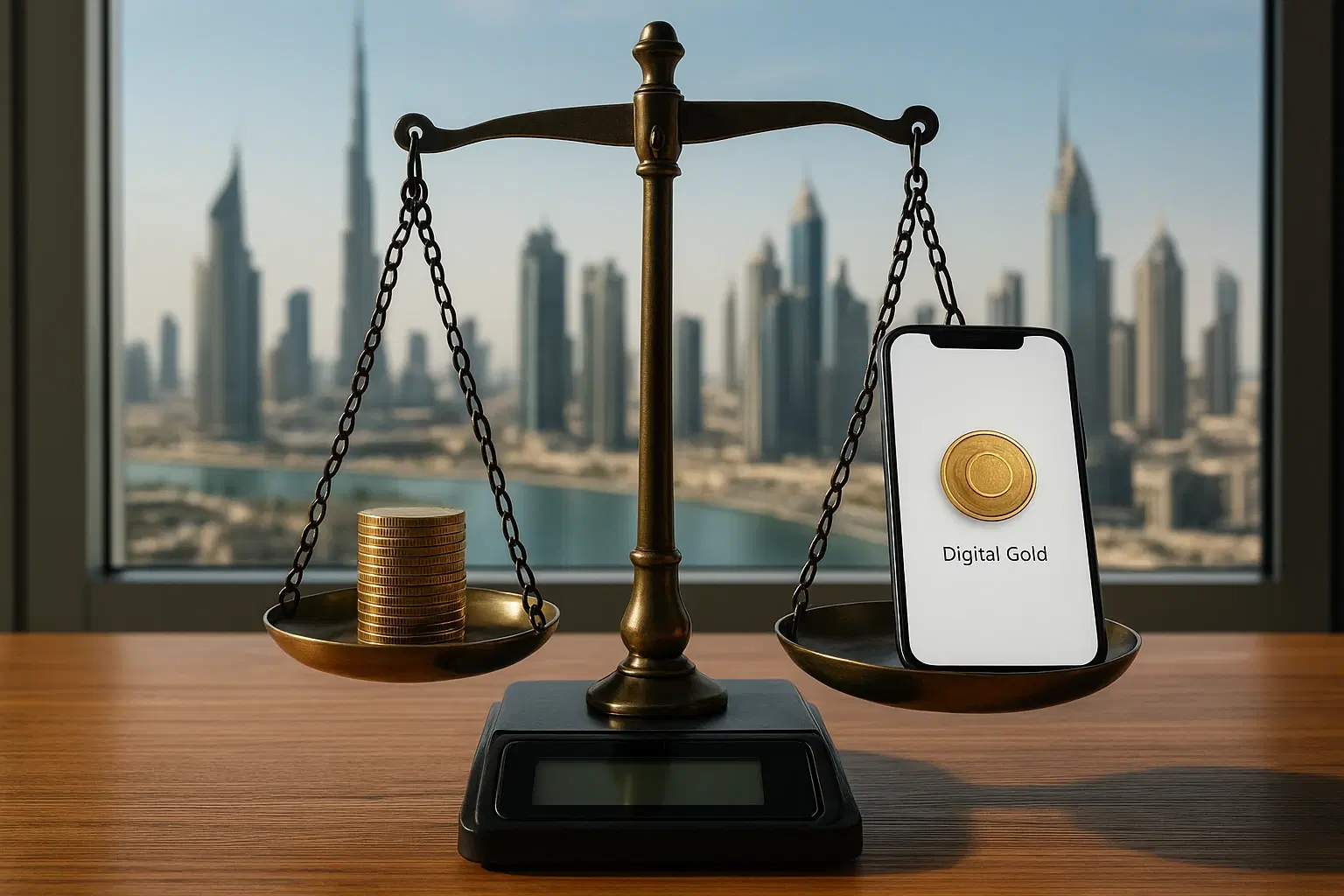
In the digital age, that belief is being tested in a new form. When you buy “digital gold”, you’re not holding coins or bangles. You’re holding a claim — a record that says somewhere, in a secure vault, a bar of gold exists in your name. The challenge isn’t in the gold itself. It’s in ensuring that the record is true.
The Chain of Custody: From Vault to Screen
Every trustworthy digital gold platform starts with the same foundation: real, physical gold stored in an accredited vault. These vaults are usually managed by international names — Brinks, Loomis, Malca-Amit — the same firms that guard central banks and sovereign reserves.
The provider buys LBMA-certified bars, typically of 99.9% purity, and stores them in these insured facilities. Then, every customer’s balance — whether one gram or one kilogram — corresponds to a specific portion of that gold, tracked on an internal ledger or a blockchain.
That’s where trust either strengthens or cracks. Is your claim “allocated” (tied to specific bars) or “unallocated” (part of a pool shared by all customers)? Allocated gold means ownership. Unallocated means a promise — a subtle but crucial difference. In a crisis, promises can be tested.
Audits, Certificates, and Proof
Reputable platforms in the GCC — and globally — are leaning on transparency as their new currency. Independent auditors such as Bureau Veritas or Ernst & Young are now hired to verify that every gram claimed digitally is actually sitting in a vault, fully insured and accounted for.
Monthly or quarterly audit reports are published online, sometimes down to the serial number of each bar. In tokenised systems, these proofs can even be viewed on a blockchain, giving buyers an open window into what was once a closed world.
It’s a modern version of what gold has always represented: verifiability. You don’t have to take someone’s word for it; you can check the math.
The GCC Standard: Regulation Catching Up
In the Gulf, regulators are moving quickly to define how digital gold should be stored, audited and traded. The UAE’s Securities and Commodities Authority (SCA) and the Dubai Multi Commodities Centre (DMCC) have both started to frame rules for digital bullion platforms — particularly those experimenting with tokenisation and retail apps.
These steps matter because the region is becoming a global testing ground for digital commodities. The DMCC has already launched initiatives that link blockchain-based gold trading directly with physical vaults in Dubai — a model designed to make every transaction auditable and every gram traceable.
For consumers in the GCC, that means your gold isn’t floating in a digital ether; it’s sitting in a vault within driving distance, under a local legal regime, not an offshore one.
The Question of Custody
If there’s one rule every digital investor should follow, it’s this: know who holds your gold. Some platforms are fully custodial — they buy, store and insure on your behalf. Others partner with third-party vaults or even issue tokens on public blockchains where you technically own the asset directly. Both can work, but the risks differ. Custodial platforms offer simplicity but concentrate trust in one company. Tokenised models add transparency but require users to understand the technology and sometimes manage their own keys. The right choice depends on what you value more — convenience or control.
Cybersecurity Is the New Vault Door
Even with physical gold secured, the digital layer must be protected. Top-tier providers now operate with bank-level encryption, multi-factor authentication, and cold storage of digital keys. Insurance policies increasingly cover not just physical theft, but also cyber breaches.
Still, the weakest link is often the user. Investors must treat digital gold apps with the same caution as online banking: strong passwords, secure devices, and awareness of phishing scams. In an ecosystem built on trust, personal vigilance remains part of the equation.
The Psychology of Safety
Safety in gold has always been psychological. The sight of a coin in your palm calms nerves in a way that no app can replicate. Yet, for a generation that shops, banks and invests on phones, “digital” doesn’t mean distant — it means immediate.
In the GCC, where wealth management is rapidly digitising, investors are learning to balance the old comfort of physical gold with the new ease of digital access. Many providers now allow redemption: if you ever wish, your digital balance can be converted into real gold bars, delivered to your home or picked up from a vault. That bridge between bytes and bullion is what keeps the trust alive.
Lessons from History
Gold has survived empires, currencies, and crises because it always kept one promise — it was there. The same will define the winners in the digital gold space.
Platforms that can prove — visibly, independently, and repeatedly — that every digital claim is backed by real, audited gold will earn that ancient trust in a modern form. Those that cannot will fade as quickly as they appeared.
So, Is It Safe?
Yes — if you choose wisely. Digital gold, in regulated, transparently-audited systems, is as safe as the vault that guards it. The technology itself is sound; it’s the governance around it that matters.
Before you buy, check three things:
- Is the gold stored in a recognised vault, insured against loss?
- Are there independent audits published regularly?
- Does the provider fall under a regulatory body with real oversight?
If the answers are yes, you are holding the future of gold — not a replacement for the metal, but its evolution.
Trust, the Oldest Currency
Gold was never about glamour. It was about certainty in uncertain times. Digital gold keeps that spirit alive — in pixels instead of coins, through screens instead of safes.
In the end, whether your wealth sits in a bar or a blockchain, it rests on the same foundation: trust. The metal hasn’t changed — only the way we hold it has.