
The One Truth Investors Keep Returning To.
In an Age of Financial Experiments, Gold Is One Constant That Endures Financial markets in 2025 feel like an endless rotation of new asset classes, algorithm-dr…
In an Age of Financial Experiments, Gold Is One Constant That Endures
Financial markets in 2025 feel like an endless rotation of new asset classes, algorithm-driven trades and speculative bubbles. Every quarter brings yet another instrument claiming uncorrelated returns or engineered stability. Yet amid this flurry of novelty, one fact stands firm: global demand for gold has continued to climb even as investors chase “the next big thing”.
According to the World Gold Council (WGC), total gold demand in 2024 reached a record 4,974.5 metric tonnes, valued at roughly US$382 billion, a 1% year-on-year rise, despite tighter liquidity conditions across global markets. In a world increasingly shaped by volatility, gold remains the benchmark against which instability is measured. When investors lose faith in narratives, they return to metal.
A Long History, Reinforced by Modern Data
Trust in gold is often dismissed as sentiment or outdated tradition. Yet the data suggests a far more rational explanation.
Historically, gold performs strongly during periods of elevated inflation, currency weakness and geopolitical tension. When inflation sits between 2–5%, gold has delivered an average annual return of around 8%, with materially stronger gains during high-inflation cycles. Investors seeking ballast, not fanfare, repeatedly turn to the metal for clarity.
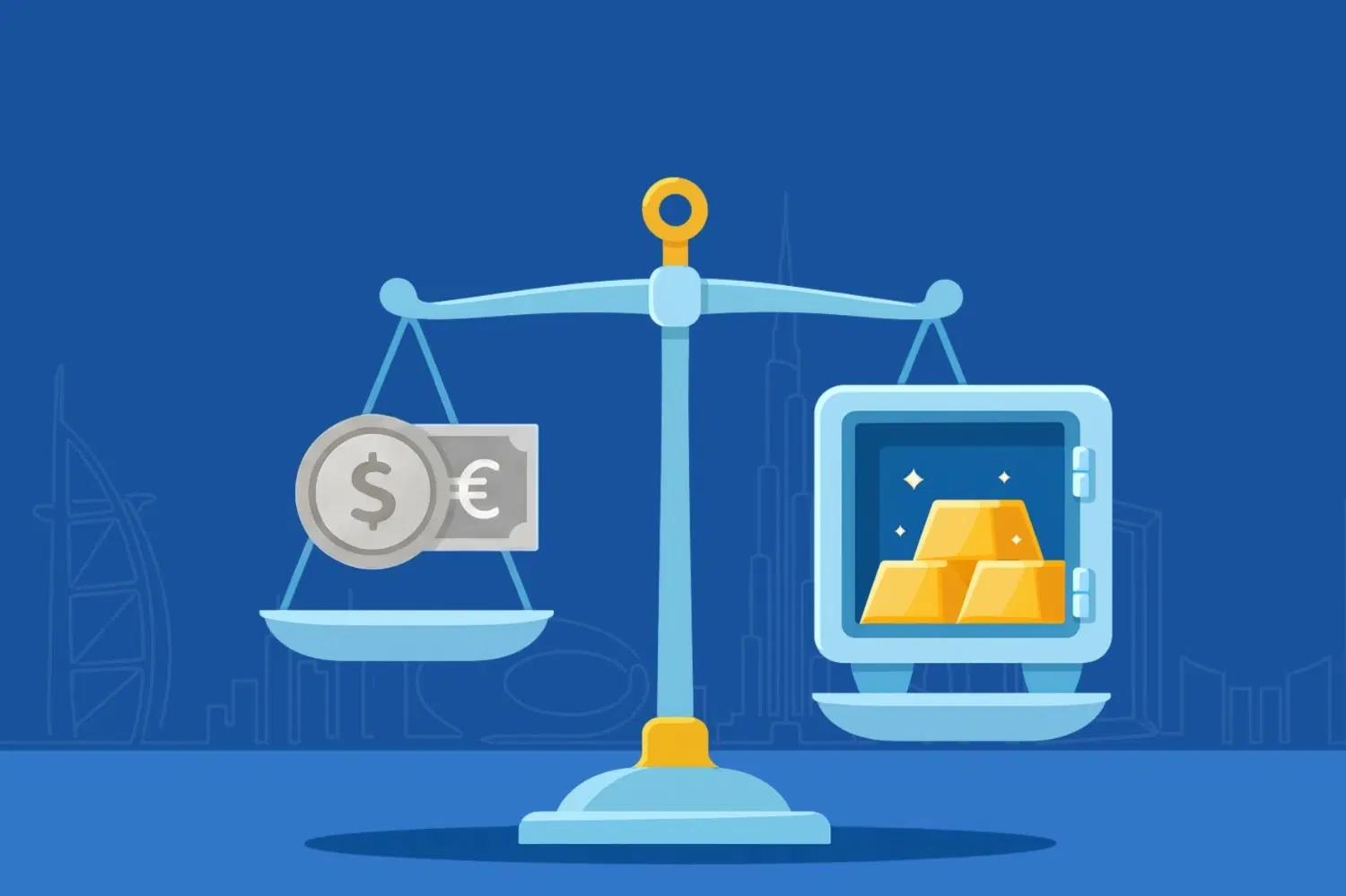
Gold’s enduring appeal lies in a unique characteristic: it carries no counterparty risk. It is neither a bond requiring repayment nor an equity requiring earnings. It exists outside the machinery of credit. In a global financial system increasingly crowded with complex derivatives and synthetic instruments, that independence has become an asset in its own right.
Central Banks Are Casting Their Vote
If one wishes to see where genuine trust lies, it is instructive to observe who is accumulating gold. Over the past three years, central banks have stepped up their purchases at a pace not seen in modern history, reversing decades of net selling. Their behaviour speaks louder than any market commentary.
- 2022: approximately 1,082 tonnes added to official reserves
- 2023: approximately 1,038 tonnes
- 2024: approximately 1,045 tonnes, the third consecutive year above the 1,000-tonne threshold
By comparison, between 2010 and 2021, annual central-bank purchases averaged roughly 470–500 tonnes. In simple terms, demand from the world’s most conservative financial actors has more than doubled.
For institutions tasked with maintaining monetary stability, this is not speculation; it is strategic risk management.
The Gulf’s Enduring Relationship with Gold
Perhaps nowhere is gold’s dual identity, culturally and financially, more apparent than in the Gulf. Dubai is now the world’s second-largest physical gold trading hub, linking supply chains between Africa, Asia and Europe, and anchoring a regional ecosystem built on trust in the metal.
Across the GCC, gold remains a preferred form of household wealth. In Saudi Arabia, demand for bars and coins has continued to rise despite softer jewellery volumes. In markets where currencies are pegged to the US dollar but geopolitical risk remains a persistent variable, gold provides a form of neutrality that transcends borders and politics.
What was once instinct has now aligned with global institutional behaviour.
Digitisation Is Strengthening Gold’s Role, Not Weakening It
What has changed is how investors access gold.
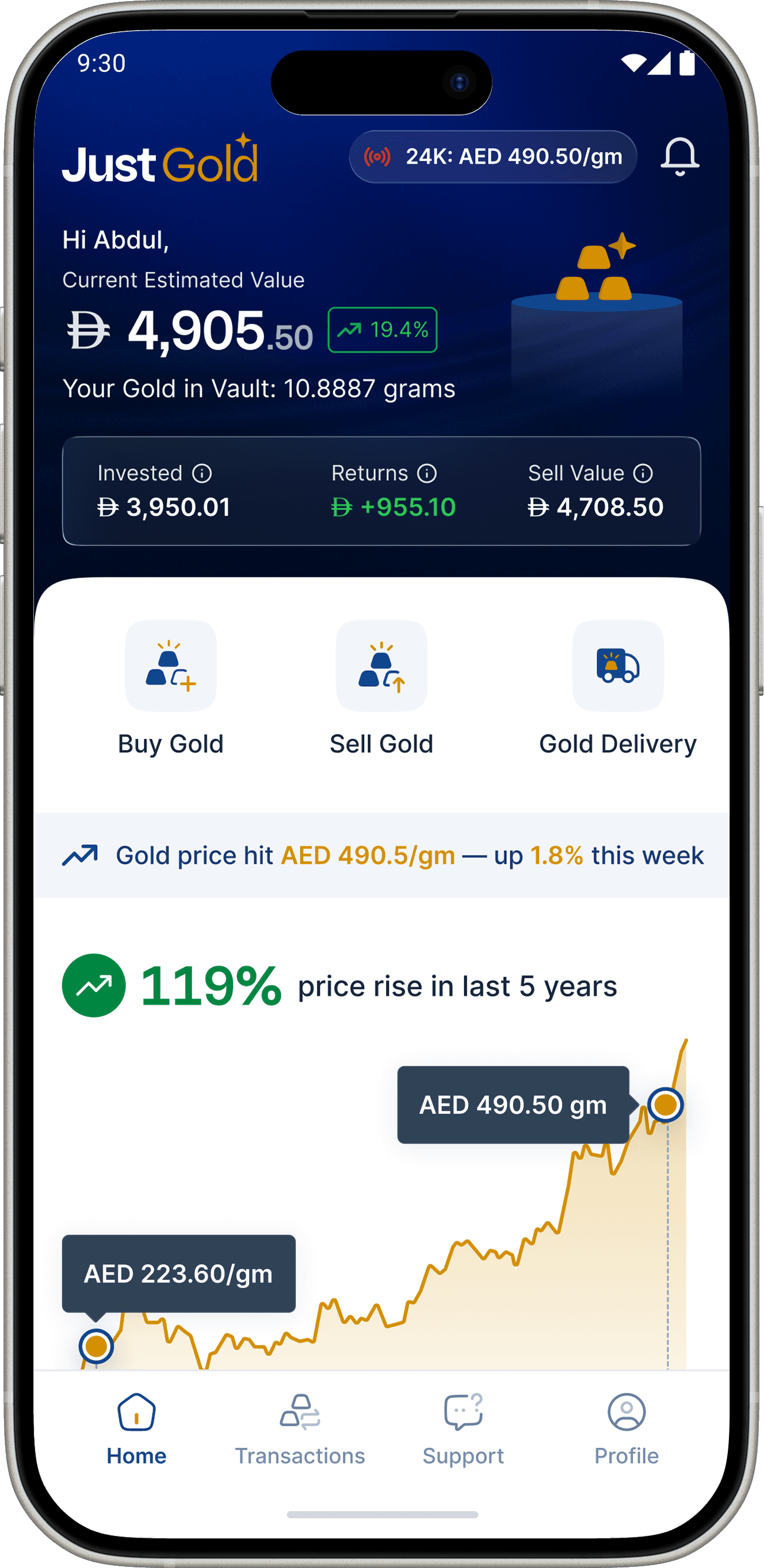
Platforms such as Just Gold in the UAE, have transformed bullion from a high-friction, episodic purchase into a seamless savings product. Investors can acquire fractional 24-carat gold, fully backed by physical bullion, with instant settlement and transparent pricing. These platforms employ blockchain verification, institutional-grade vaulting and Shariah-compliant structures to build trust across demographics.
For younger savers, digital gold merges ancient logic with modern infrastructure, turning what was once an occasional purchase into a disciplined, automated investment habit.
Moreover, Just Gold is among the few places where you can actually buy 24K gold at the lowest prices.
Why Gold Still Sits at the Core of Global Wealth Strategy
Three enduring reasons, now supported by fresh data that keep gold at the centre of diversified portfolios:
- No default risk: its value is independent of any borrower or intermediary.
- Finite supply: global mine production remained steady at 3,661 tonnes in 2024, underscoring long-term scarcity.
- Crisis performance: in 2024, investment demand rose 25% to around 1,180 tonnes, the highest in four years, even as jewellery consumption slowed.
Gold does not shout. It does not promise extraordinary returns. It behaves instead like crisis insurance, quiet until essential.
A Traditional Asset, Perfectly Suited to a Modern World
If financial markets are defined by uncertainty, then gold’s appeal becomes clearer. Its value is rooted not in optimism but in history, scarcity and universal recognition.
Gold is not merely a relic of yesterday’s economy. It is the stabilising force of tomorrow. And at a time when economic narratives shift with disconcerting speed, that constancy has rarely been more relevant.