
The Silent Tax of Trade Wars: Navigating Global Uncertainty with Ancient Wisdom
The headlines today feel unsettlingly familiar to historians. In Brussels, the European Union has drawn a line in the sand, imposing hefty tariffs on Chinese el…
It is easy to scroll past news of a 35.3% tariff on an imported car and think it does not affect you. But history tells a different story. Every time nations raise walls to protect their industries, the cost of living quietly climbs over those walls to greet the consumer. We saw it with the Smoot-Hawley Tariff Act of 1930, which turned a recession into a depression. We saw it in the 1980s trade tensions between the US and Japan.
The pattern is undeniable: when global trade fragments, currency volatility follows.
The Illusion of Stability in Fiat Currency
The current standoff over electric vehicles is not just about cars; it is a symptom of a fracturing global order. The EU is pursuing a strategy of "de-risking," attempting to insulate its supply chains. However, for the individual saver, true de-risking looks very different. Relying solely on fiat currency during times of geopolitical friction is akin to building a house on a fault line. The value of paper money is inextricably linked to the economic health and diplomatic relations of the issuing government.
When trade barriers rise, efficiency drops. Prices for goods increase, and the purchasing power of your hard-earned salary diminishes. This is the "silent tax" of economic warfare. It does not appear on your pay stub, but you feel it when your savings buy less today than they did last year.
In this climate of uncertainty, the most sophisticated investors do not look for the next hot stock; they look for ground that does not move.
Gold: The Asset That Ignores Borders
For thousands of years, through the rise and fall of empires, one asset has remained the ultimate savings technology. Gold does not care about trade deficits. It is indifferent to tariffs or political posturing in Brussels or Beijing. While the Euro and the Yuan wrestle for dominance, gold sits quietly, preserving value as it has done since the time of the Roman denarius.
Historically, during periods of "great power competition," citizens who held physical assets fared significantly better than those holding only currency. The logic is simple: paper money is a promise, while gold is a fact. In an era where promises are being broken across negotiation tables, facts become incredibly valuable.
Modernizing the Oldest Safe Haven
The challenge for the modern individual has always been access. Historically, buying gold meant navigating shady dealers, paying high premiums, and worrying about where to store heavy bars. It was a privilege for the wealthy.
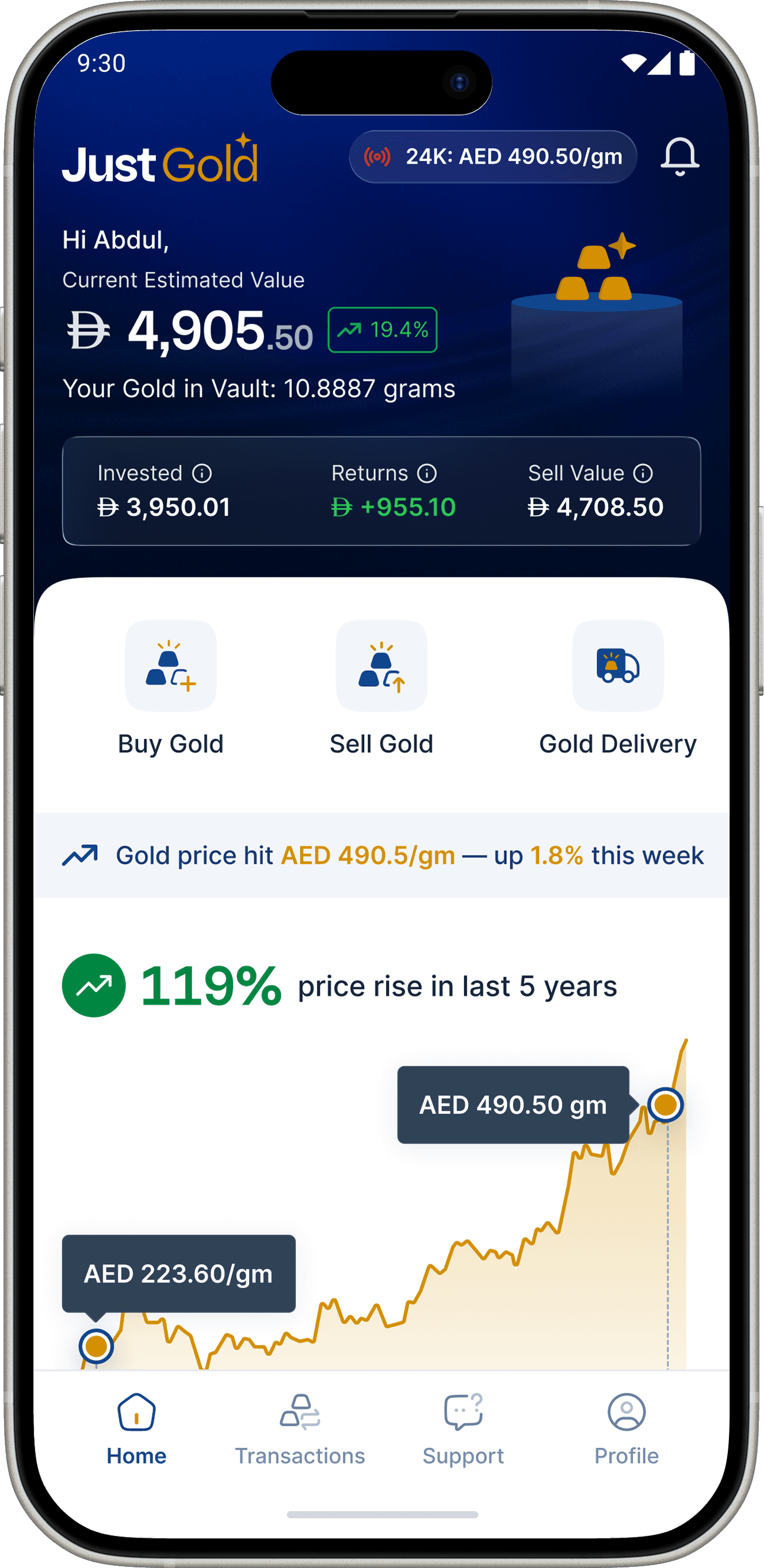
Technology has finally democratized this timeless protection. You no longer need a vault in your basement to secure your future. Platforms likeJustGoldhave bridged the gap between ancient security and modern convenience. By allowing you to convert currency into government-regulated, physically backed gold, theJustGold apptransforms your smartphone into a personal fortress against inflation.
Imagine the psychological relief of knowing that a portion of your wealth is immune to the next tariff announcement.
Building Your Personal "Central Bank"
Central banks around the world are currently buying gold at record rates. They see the writing on the wall. They understand that in a fragmented world, having a neutral reserve asset is essential. Why shouldn't you operate with the same prudence?
You can adopt a strategy of "micro-saving." Instead of waiting to buy a whole ounce, you can accumulate gold in small, manageable amounts. This is the essence of theJustGoldphilosophy: making the discipline of saving accessible to everyone. Whether it is 10 AED or 10,000, the goal is to move your energy from a depreciating vessel (cash) to a preserving one (gold).
The Future Belongs to the Prepared
The trade dispute between the EU and China over electric vehicles is likely just the opening chapter of a longer story of economic realignment. We may see retaliatory tariffs on dairy, pork, or luxury goods next. The specifics will change, but the underlying instability is here to stay.
You cannot control global trade policy. You cannot dictate the outcome of negotiations in Brussels. But you can control the quality of your savings. You can choose to opt out of the volatility.
By integrating gold into your financial habits, you are not just saving; you are taking a stand for your own financial sovereignty. In a world of shifting alliances and economic uncertainty, gold remains the only currency that never needs to introduce itself.